Business Tips

What Is an Itemized Receipt? A Complete Guide to Smart Expense Tracking

Admin

Admin

Manager

10 March 2026
5 Min Read
What Is an Itemized Receipt? A Complete Guide to Smart Expense Tracking

An itemized receipt isn't just paperwork. It's your financial alibi, your tax shield, and your budget's best friend rolled into one clean document. Whether you're a freelancer tracking deductible expenses, a small business owner managing cash flow, or someone who wants to know where their money actually went, understanding itemized receipts changes everything.

What Is an Itemized Receipt, Really?

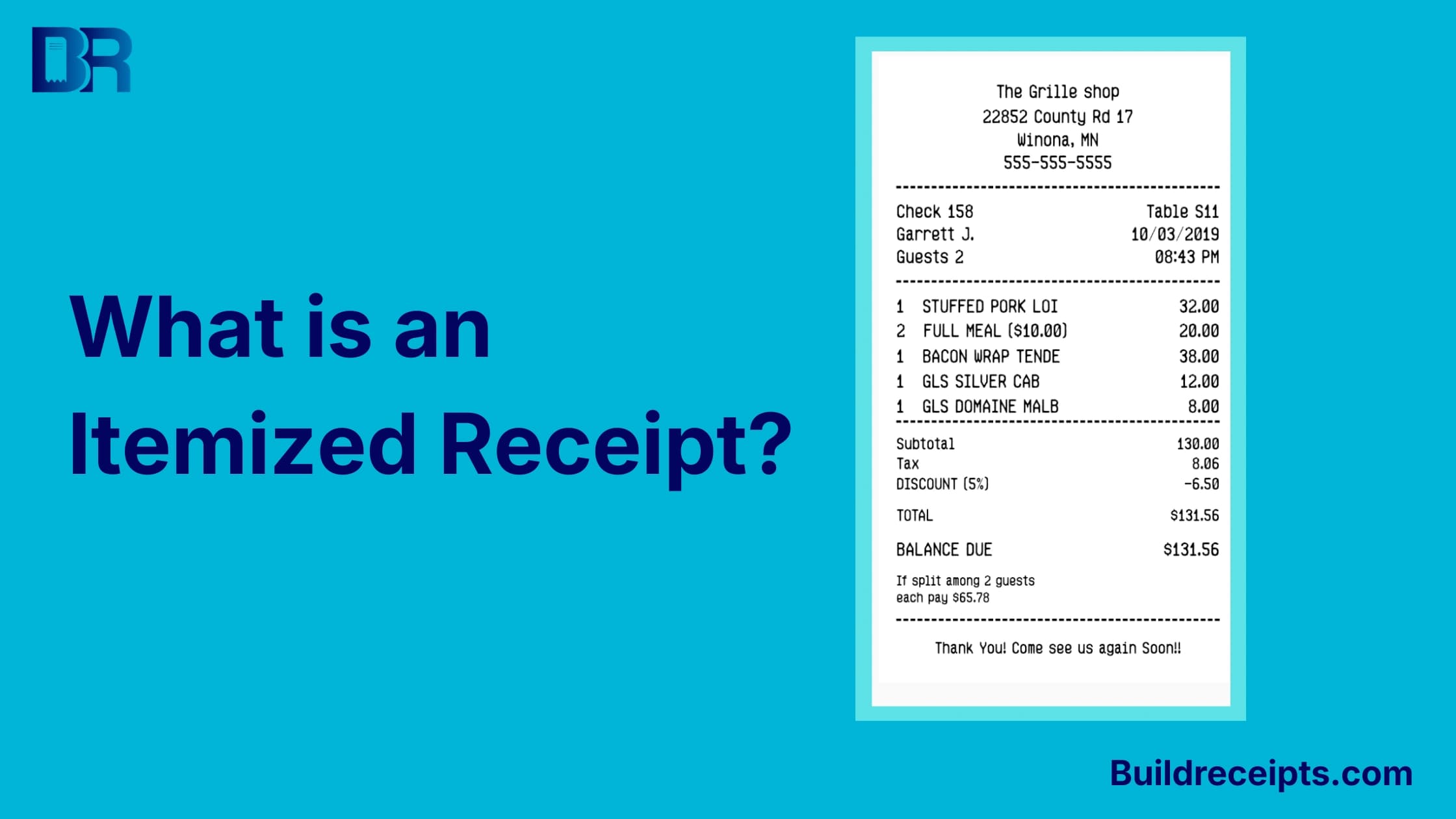
An itemized receipt is a detailed transaction record that breaks down every single product or service purchased, line by line. Unlike a standard receipt that simply screams "$47.50 PAID" and calls it a day, an itemized receipt tells the full story of what you bought, how much each item cost, quantities, taxes, and the final tally.

Think of it this way: A regular receipt is like a movie trailer. An itemized receipt is the director's cut with deleted scenes and commentary. It shows the room charge separate from the resort fee, the steak dinner separate from the glass of wine, tand he printer paper separate from the ink cartridges.

According to SAP Concur, this level of detail transforms receipt management from "a sea of crumpled paper and missing information" into a clean audit trail that finance teams actually trust.

The Anatomy of a Proper Itemized Receipt

Every legitimate itemized receipt contains these critical elements :

  • Vendor Information: Business name, address, phone number, and sometimes email
  • Transaction Date & Time: When the purchase happened (crucial for tax year documentation)
  • Receipt/Invoice Number: A unique identifier for tracking
  • Line-Item Breakdown: Each product or service with description, quantity, and unit price
  • Subtotal: Sum before taxes and additional charges
  • Taxes & Fees: Sales tax, service charges, resort fees—itemized separately
  • Grand Total: The final amount paid
  • Payment Method: Cash, credit card, digital wallet, or corporate card

Here's where it gets interesting. The IRS doesn't just prefer this level of detail—they practically demand it for business expense deductions. A credit card slip showing only a total amount? That's "documentary evidence" that might not survive an audit

Itemized Receipt vs. Regular Receipt: The Critical Differences

The gap between these two document types is wider than the Grand Canyon—and potentially just as costly if you choose wrong.

FeatureRegular ReceiptItemized Receipt
Detail LevelShows only the total amountLists every item, quantity, and individual price
Expense TrackingUseless for categorizationEnables precise budget allocation
Tax ComplianceRisky during auditsIRS-preferred documentation
Reimbursement SpeedOften delayed for clarificationFaster approval with clear documentation
Fraud DetectionEasy to hide personal purchasesTransparent line-by-line verification

Let's get concrete. Imagine your employee submits a $553 hotel expense after a business trip :

Regular Receipt Shows:

  • Total: $553 — "Lodging."

Itemized Receipt Reveals:

  • Room charge: $420 — "Lodging"
  • Resort fee: $30 — "Lodging.g"
  • Room service (dinner): $63 — "Meals"
  • Daily parking: $40 — "Parki.ng."

See the problem? With the regular receipt, you're guessing. With the itemized version, you know exactly what counts as lodging, what falls under meals (subject to different deduction limits), and what parking expenses might need separate approval. This isn't just accounting nitpicking—it's the difference between compliant expense reports and audit headaches.

Why Itemized Receipts Matter for Your Bottom Line

The Tax Compliance Reality Check

Here's a truth bomb that keeps accountants awake at night: The IRS operates on a "guilty until proven innocent" basis when it comes to business expenses. You don't just say you spent $200 on office supplies—you prove it with documentary evidence that includes the date, amount, place, and business purpose.

The stakes? Without proper documentation, legitimate deductions get disallowed. That means you pay more tax than legally necessary. For small businesses operating on thin margins, this isn't just annoying—it's potentially devastating.

The IRS does offer a $75 threshold where receipts aren't strictly required for smaller expenses, but here's the catch: You still need to record the business purpose, date, and location. And for lodging expenses? Receipts are mandatory regardless of the amount.

Expense Management That Doesn't Make You Cry

Manual expense processing is expensive. Like, "$26.63 per report and 20 minutes of someone's life" is expensive. When you multiply that across a team submitting weekly expense reports, you're looking at thousands in hidden operational costs annually.

But here's the kicker: 19% of expense reports contain errors or missing information, adding another $52 and 18 minutes per report for corrections. Itemized receipts dramatically reduce these errors because the details are already there—no guessing, no back-and-forth emails asking "What exactly was this $47 charge for?"

The Thermal Paper Time Bomb

Ever pulled out a receipt from six months ago only to find it completely blank? You're not alone. Most retail receipts use thermal paper that degrades when exposed to heat, light, or even just time. That "disappearing ink" isn't a conspiracy—it's chemistry. The heat-sensitive coating that creates the print eventually fades, leaving you with expensive proof of nothing.

Digital itemized receipts solve this. They don't fade, they don't crumple, and they don't get eaten by washing machines.

When You Absolutely Need Itemized Receipts?

Certain situations demand itemized documentation. Skip it, and you're asking for trouble:

Business Travel & Reimbursements: Hotels, rental cars, and restaurants must provide itemized breakdowns. Your finance team needs to separate lodging from meals (which have different tax treatment) and verify alcohol wasn't included in that "business dinner".

Tax Deductions & Audits: The IRS specifically scrutinizes travel, entertainment, and vehicle expenses. Itemized receipts provide the "business purpose" documentation that transforms a suspicious deduction into a bulletproof one

Warranty Claims & Returns: Try returning electronics or claiming warranty service with a receipt that just says "$899." Retailers and manufacturers need to see exactly what was purchased, when, and for how much.

Expense Fraud Prevention: Itemized details make it nearly impossible to slip personal purchases into business expense reports. That $200 "office supply" charge looks suspicious when the itemized receipt reveals it was actually a video game console .

Common Itemized Receipt Challenges (And How to Solve Them)

The "Lost Receipt" Panic

We've all been there. You need that hotel folio for your expense report, but it's vanished into the void. Solution: Most vendors can reprint or email duplicate receipts if you contact them with your transaction date and card details. For future protection, snap a photo immediately or use a digital receipt generator like BuildReceipts to create clean, permanent records.

The Faded Ink Disaster

That thermal paper receipt from six months ago? It's now a blank piece of paper. Prevention beats cure here. Digital receipt creation tools eliminate this problem by generating PDF receipts that never degrade.

The "Is This Good Enough?" Anxiety

Not sure if your receipt meets IRS standards? Check for these five elements: payee name, date, amount, place, and business purpose. If any are missing, add them immediately while the memory is fresh. A note like "Lunch with client John Doe to discuss Q3 contract" transforms a vague restaurant bill into audit-ready documentation.

Best Practices for Managing Itemized Receipts

Digitize Immediately: The moment you receive a paper receipt, photograph it or create a digital version. Tools like BuildReceipts let you generate clean, professional receipts with all required fields, ensuring nothing gets lost to time or laundry cycles .

Categorize as You Go: Don't dump everything into "Miscellaneous." Use the line-item details to sort expenses properly—lodging, meals, transportation, and office supplies. Your future self (and your accountant) will thank you during tax season.

Store with Context: A receipt alone isn't enough. Note the business purpose, attendees for meals, and project codes. This context turns a simple transaction record into a comprehensive audit defense.

Review Before Submitting: Check that every itemized receipt includes all required elements. Missing vendor address? Unclear date? Fix it now rather than facing reimbursement delays later.

How BuildReceipts Simplifies Itemized Receipt Creation

Creating professional, compliant itemized receipts shouldn't require an accounting degree. BuildReceipts offers a straightforward solution for generating detailed receipts that meet business and tax requirements.

What makes it work:

  • Itemized Line Items: Add multiple products or services with quantities, descriptions, and individual amounts—exactly what finance teams and auditors want to see.
  • Automatic Calculations: Taxes, subtotals, and grand totals compute automatically, eliminating math errors.
  • Professional Templates: Clean, readable formats that work for reimbursements, budgeting, and record-keeping.
  • Instant PDF Downloads: No fading ink, no lost paper—just permanent digital records you can store anywhere.
  • Edit & Re-download: Made a typo? Access your receipt history, fix it, and download an updated version instantly.

Whether you're documenting a cash payment for services, creating a record for a warranty purchase, or organizing expenses for tax preparation, having a tool that generates proper itemized receipts saves time and prevents headaches.

The Bottom Line

Itemized receipts aren't bureaucratic busywork—they're financial protection. In a world where the IRS can disallow legitimate deductions over missing documentation, and where thermal paper fades faster than your New Year's resolutions, having detailed, digital records isn't optional. It's survival.

The difference between a regular receipt and an itemized one is the difference between "I think I spent this" and "I can prove exactly what, when, where, and why." For businesses, that proof translates directly to faster reimbursements, cleaner audits, and maximized tax deductions. For individuals, it means organized finances and zero stress when tax season hits.

Stop treating receipts like trash. Start treating them like the financial evidence they are. Your future self—and your accountant—will buy you dinner. And yes, you'll have the itemized receipt to prove it.