Invoice vs. Receipt: What Is the Difference?

Robert brooks
content writer
Jump to Section
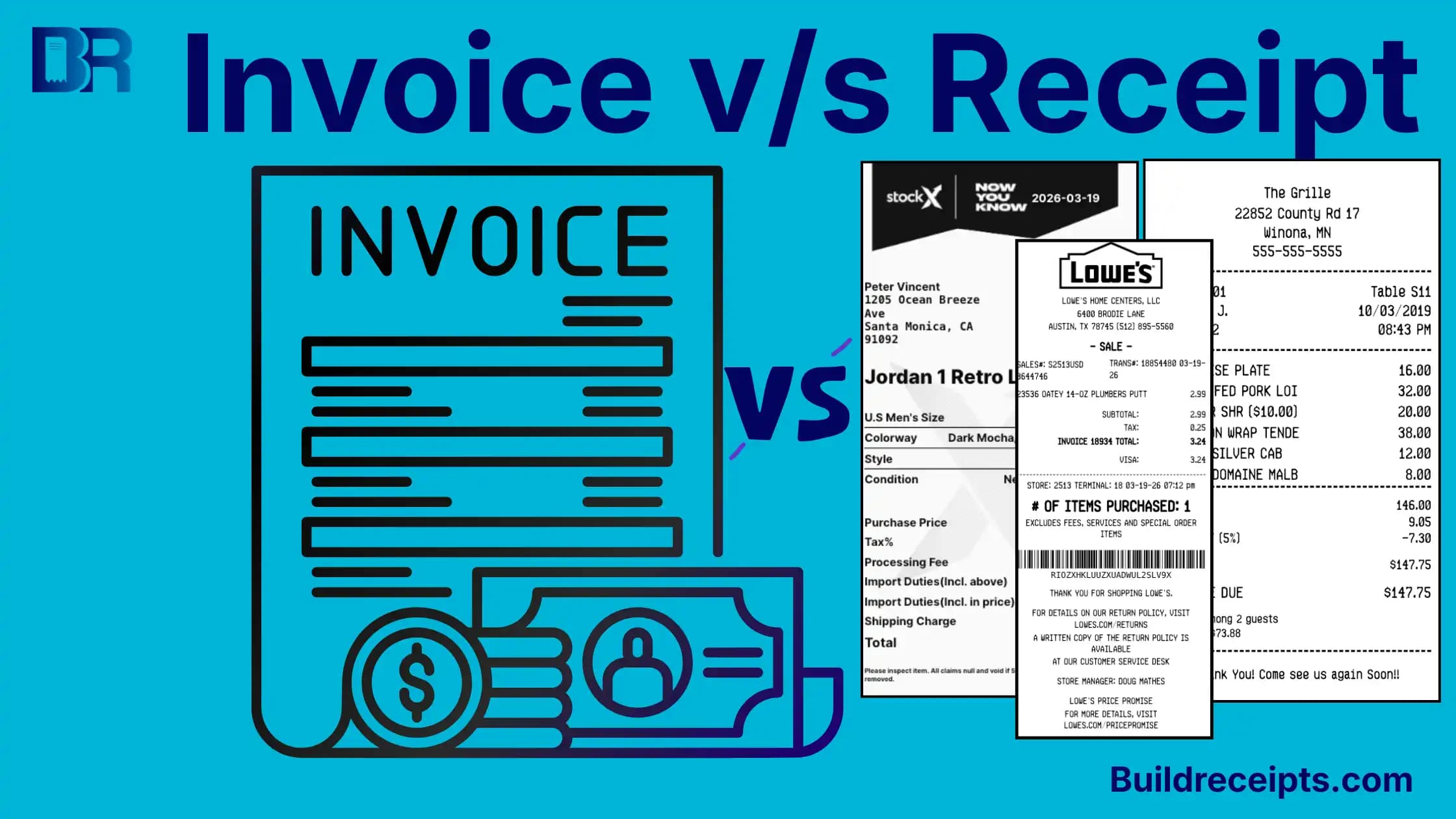
An invoice lists charges and usually asks for payment. A receipt records money received. The name alone is not enough: an invoice may be unpaid, part-paid, or paid in full.
If a client sends an invoice and says the bill is settled, check the paid amount, payment date, and balance. A clear paid invoice may help show payment, but an unpaid bill does not.
Direct Answer: Invoice vs Receipt
Use an invoice to bill a customer and track what they owe. Issue a receipt when you receive a payment, including a deposit or part payment. A receipt does not have to mean the whole bill is settled.
A paid invoice can serve as a payment record when the facts are clear and the recipient accepts it. Keep the matching payment record too.
What Is an Invoice?
An invoice is a document a business sends to a customer to request payment for goods or services.
It shows the goods or work, price, due date, and how to pay. Service firms and sellers who allow payment later often use invoices.
In simple terms, an invoice says: “Here is the work or product, and here is what you owe me.”
When businesses use invoices
A business often sends an invoice after a job or delivery, before the buyer pays. Some bills ask for payment within 7, 15, or 30 days. Others request a deposit before work starts.
What an invoice usually includes
Label it Invoice and add a unique number. Name the seller and buyer. List the items, prices, tax or fees, and total. Add the issue date, due date, and how to pay.
Once a payment arrives, you can make a receipt online and link it to the invoice number.
What Is a Receipt?
A receipt is a document that proves a payment already happened.
It gives the buyer and seller a record of money received. They may need it for their books, a return, a work claim, or taxes.
In simple terms, a receipt says: “Payment received.”
When businesses use receipts
Businesses issue receipts for money received. This may settle the full bill or cover only a deposit. Keep the payment date, amount, and balance clear so both sides know what the record means.
What a receipt usually includes
Label it Receipt. Add the seller, payment date, and a receipt or order number. List what was sold and the money received. Show any tax, fee, payment method, and balance.
A card total may not show what was bought. See what an itemized receipt includes when you need each item and price.
Invoice vs Receipt: The Key Difference
The key difference is purpose, not a rule that every invoice must come before payment.
| Feature | Invoice | Receipt |
| Main job | List charges and track the bill | Record payment received |
| Usual timing | Often sent before payment; can be issued or updated after it | Issued for a payment that happened |
| Payment status | May be unpaid, part-paid, or paid | Should state the payment received and balance |
| Amount due | Shows the bill or balance to collect | Can show a balance after a part payment |
| Payment proof | Not from the bill alone; check paid details | Records payment when issued truthfully by the recipient |
| Due date and terms | Common when payment is still due | May refer to remaining terms, but mainly records payment |
| Item details | Can list each item or service | Can list each item or service |
| Reference number | Invoice number | Receipt number, often linked to an invoice or order |
| Bookkeeping use | Billing and unpaid balances | Payment matching and customer records |
| Returns or work claims | Acceptance depends on proof and recipient rules | Acceptance depends on proof and recipient rules |
When to Use an Invoice
Use an invoice when your customer still needs to pay you.
This is common for client work, repairs, and orders sold on credit. The invoice helps you track the work, due date, and unpaid balance. It gives the buyer a bill to check.
When to Use a Receipt
Use a receipt when the customer has already paid.
A receipt can record a cash, card, or other payment. For a sale you issue, an itemized receipt tool can help show each item. It cannot verify the payment or create another seller's official record.
Does an Invoice Mean You've Been Paid?
Not by itself. Check the payment record, not just the word Invoice. A status label can also be changed by a business: Stripe's invoice guidance notes that invoices can be marked paid for payments made outside Stripe.
A Quick Payment-Status Check
Here is an illustrative $500 bill with no extra charges:
| Status | Amount paid | Balance | What to check |
| Unpaid | $0 | $500 | No receipt for a payment yet |
| Part-paid | $200 | $300 | A receipt should show the $200 payment |
| Paid in full | $500 | $0 | Match the date and payment reference |
A zero balance can also result from a credit or write-off. It does not always mean $500 changed hands. Ask the issuer to explain an unclear balance.
Can an Invoice Be Used as a Receipt?
A paid invoice may serve as a payment record if it clearly shows the amount received, date, payment status, and balance. Ask the employer, seller, or other recipient whether it meets their needs.
An invoice that only lists charges is not proof of payment. Keep the bank, card, or other payment record with it, and request a separate receipt if one is needed.
Can You Send an Invoice After Payment?
Yes. A business may issue an invoice for a sale already paid or send an updated paid invoice. Make the status clear so the customer does not pay twice. Show the real amount received and any balance left.
Invoice vs Receipt Example
Here is an illustrative example, not a real customer transaction.
A freelance designer finishes a logo project for a client.
First, the designer sends an invoice:
- Logo design project
- Project total: $500
- Due in 7 days
- Payment by bank transfer or card
The client pays the $500.
After that, the designer sends a receipt:
- Payment received: $500
- Date paid: May 25, 2026
- Payment method: bank transfer
- Project reference: Logo design project
The invoice asked for the money. The receipt confirmed that the money had arrived.
If you are building these records manually and want them to look cleaner from the start, the main custom receipt generator can save a lot of formatting time.
How Invoices and Receipts Work Together
Invoices and receipts are not competing documents. They are part of the same payment flow.
In a common workflow, the seller sends a bill, the buyer pays, and the seller sends a receipt. Match the records using the invoice number. A deposit or later refund needs its own clear entry.
Why Some Clients Ask for Both an Invoice and a Receipt
At first, asking for both can feel repetitive. But from the client side, it often makes perfect sense.
Some clients need the invoice to approve the payment internally. Then they need the receipt after payment to close out the expense.
A finance team may match the bill to the payment before closing a claim. The invoice explains the charge. The receipt records the money received.
Where Is the Invoice Number on a Receipt?
This depends on the business and the format being used.
In some systems, the receipt includes a reference to the original invoice number. In other systems, the receipt has its own separate receipt number or transaction ID.
If both documents are connected, you may see:
- Invoice #1024 on the invoice
- Receipt #2088 on the receipt
- or a note on the receipt that says Paid against Invoice #1024
That reference helps businesses match billing records with payment records.
Use the invoice reference to match the receipt to the bill. Keep each document's own number rather than treating every reference as the same code.
Common Mistakes People Make
Most confusion around invoice vs receipt comes from a few very normal mistakes.
1. Using the words interchangeably
They are related, but they are not the same.
2. Treating an invoice like proof of payment
An unpaid invoice shows what was billed. A paid invoice needs clear payment details and supporting records.
3. Sending no receipt after payment
That leaves the customer without a clean payment record.
4. Using unclear document formats
If your paperwork does not clearly say Invoice or Receipt, confusion happens fast.
5. Forgetting item details when they matter
An item list helps explain the total. Keep it with the payment record so a reader can check both.
Which One Matters More for Taxes and Recordkeeping?
Keep both when they explain different parts of a sale. An invoice can show the work or goods billed; a receipt and payment record can show what was paid. Which records matter depends on the transaction and accounting rules.
The IRS business recordkeeping guide says that more than one supporting document may be needed. A document title alone does not make an expense deductible.
How BuildReceipts Helps
For a real sale you issue, BuildReceipts can help format the payment details. Check the amount and balance before sharing. It does not confirm that money moved, and a custom file is not an official record from another seller.
The Bottom Line
An invoice explains the bill. A receipt explains the payment. Check the status and figures rather than relying on the title. Keep a clear link between the invoice, payment, receipt, and any refund.
Content updated September 25, 2026. Source checks and edits were AI-assisted. No new human or professional review is claimed.
Frequently Asked Questions
Have more questions about Invoice vs. Receipt: What Is the Difference?? Check out these common queries.